安溪县2025年秋八年级英语县本练习9-1
【Unit 9Listening & Speaking】
学校: 班级: 姓名:成绩:
一、短语默写
1. 带走;夺走2. 暴雨
3. 焚毁4. 困(于);陷(人)
5. 需要6. 席卷,横扫
7. 家庭成员8. 安然无恙
9. 谢天谢地10. 碎成碎片
11. 受伤12. 越来越糟
13.气候变化14. 全年
15. 环境保护
二、单项选择
1. Keep away from the tall buildings while the is happening, or you'll be hard to avoid the risk.
A. programmeB. earthquakeC. development
2. In ancient time, workers were forced for little money, and they even couldn't support their family.
A. to workB. workC. working
3. As far as I know, half of the silk in China is produced in Jiangsu and Zhejiang.
A. hardlyB. actuallyC. nearly
4. —It's for students to ride e-bikes on the road so fast.
—You're right. They may hurt themselves badly.
A. privateB. seriousC. terrible
5.The boy is in hospital now. He has a serious heart .
A. disease; illnessB. sick; diseaseC. sick; illness
三、情景交际
1. A:?
B: It is a sudden shaking of the earth's surface. Early warnings can helpreduce harm.
2. A:?
B: It is a sudden rise of temperature.
3. A: Many animals died because of the terrible wildfire.
B:!
4. A: I hear a flood swept through your city.?
B: Yes, our family are lucky to be not there.
四、阅读理解
Earthquakes usually come without warning. There is plenty of danger when an earthquakehappens. Although it's dangerous in an earthquake, we can still do many things to protect ourselves.
We should try to stay calm as the earth begins to shake. Staying calm is not easy but can save our lives. Then how can we make the chances of surviving go up?
If we are inside when the earthquake starts, it's a good idea to get under a table or a bed. And the strong table or bed can protect us from falling objects. We shouldn't stand near the windows. It's dangerous because of lots of glass in them. Never stay in bed or use the elevator. It's wrong to try to jump out through the windows or from the stairs(楼梯).
If we are outside, we should stay in an open area. We should stay away from buildings and trees. If we are in a car, we'd better park the car and stay in it. The parking place should be a place without trees and tall buildings. If we are close to the sea, it's clever of us to get as far away from the water as possible. Earthquakes can cause huge waves(浪).
All in all, it's important to learn about earthquakes. Then we can have more chances tosurvive.
1. What should we do first when an earthquake starts?
A. Keep calm. B. Know about its danger.
C. Try to run out of the house. D. Learn ways against an earthquake.
2. It's safe for us to when an earthquake happens.
A. B. C. D.
3. What does the underlined word "it" in Paragraph 4 refer to?
A. The car.B. The sea.C. The water.D. The building.
4. If we are in a car during an earthquake, where should we park the car?
A. In a place with many tall buildings.
B. In a place with lots of trees.
C. In a place without trees and tall buildings.
D. Near the sea.
5. What could be the best title for the text?
A. The Causes of Earthquakes.
B. How to Protect Ourselves During Earthquakes.
C. The Harm Caused by Earthquakes.
D. Different Kinds of Earthquakes.
安溪县2025年秋八年级英语县本练习9-2
【Unit9 Exploring the topic】
学校: 班级: 姓名:成绩:
一、短语默写
1.大量地,数量众多地2.填满;装满
3.失去某人的家园4.熟食
5.做准备6.席卷;横扫
7.生活/生存环境8.受伤
9.在某人伸手可及的范围之内 10.立刻,马上11.电线
12.全世界13.远离
14.太......而不能......15.把......付诸实践
16.安全培训17.期待做某事
二、填空
1. We need to finish all the (prepare) for the sports meeting by Friday.
2. My dad always keeps two (flashlight) in the car for emergencies(紧急情况).
3. Burning oil to make energy leads to more and more (harm) gases.
4. Please pass me that bottle of . I want to stick the picture in my notebook.
5. —Must I return the book to the library two weeks?
—No,you needn't. You can keep it for one month.
6. He makes great progress because he studies much (hard).
7. It rains (often) in spring than in winter in my hometown.
8. —Which color do you like (well) ,pink,silver or purple?
—Silver.
9. —Judy did well in the school singing competition.
—Yes,she sang (beautifully) of all.
10. Last autumn was the warmest one in the past ten years, so many birds (late) than usual for their trip south.
三、情景交际
1. A:snowstorm?
B: A snowstorm is a storm with strong winds and a lot of snow.
2. A:the earthquake?
B: I think it's very dangerous.
3. A: There are many reports of natural disasters in China.
B:!
4. A:
B: I'm not very well.
四、看图写话
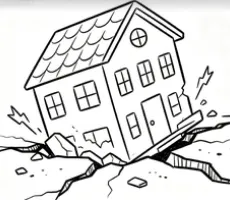
1.sweep, last week
2.busy
3.lose
4.in need
五、短文填词
Fire is closely related to our lives. At the same time, it's one of the biggest1 (danger) to us.Today, when a fire starts, we can use great tools and call a fire station for help. But in ancient China,there 2 (be) no such things. So how did ancient Chinese people fight fires?
As early as the Tang Dynasty (618-907 CE) , people used water bags to fight fires. Each bag could hold 150 3 200 kg of water. When a fire happened, people would press the bag. Then water would pour out onto the fire.
During the Song Dynasty, people4(build) many tall towers in cities. Guards stood on the towers day and night. They watched for smoke or fire in every corner of the city. If they found a fire, they shouted 5 (loud) and rang big bells to warn everyone. These towers were China's 6(early) firestations. The Song government also did something important. It set up fire brigades(消防队) with many strong men. These men trained hard every day. They carried water tools and ran fast to fire sites. They became 7 first professional( k 的) firemen in ancient China.
The history of firefighting in China is a story of 8(wise) and strength. Ancient people had no modern machines,9they used their heads and worked together. When we face any big trouble, people's hard work can always be 10(amaze).
安溪县2025年秋八年级英语县本练习9-3
【Unit 9 Developing the Topic】
学校: 班级: 姓名:成绩:
一、单项选择题
1. I ______ home when a heavy thunderstorm suddenly came last night.
A. rideB. rodeC. am ridingD. was riding
2.The wind blew ______ and ______ as the typhoon came near our city.
A. hard; hardB. harder; harderC. hard; harderD. harder; hard
3. ______ half an hour, the rain became lighter and the sky slowly cleared up.
A. AfterB. ForC. AtD. In
4.— Look at the dark clouds! I think a ______ is coming.
—Yes, we should hurry home.
A.heatwave B. snowstorm C. rainstorm D. earthquake
5. — I heard a loud noise. Was that ______?
—Yes, it was. I saw the lightning first.
A.flood B. thunder C. disaster D. insect
6. The heavy rain ______ for three days, and many roads were flooded.
A. poured down B. broke down C. stepped out D. hung on
二、用所给词的适当形式填空
1.The wind is blowing _________(hard) than yesterday.
2.A terrible earthquake _________(hit) the town in 2023.
3.He was _________(ride) a bike when the rain came.
4._________(final), we got to the safe place before dark.
5.I remember _________(see) him at the store last week.
6.You should stay away _________ the broken building.
7.The girl seemed _________(be) very scared in the storm.
8.The class became _________(noise) when the teacher left.
9.We decided _________(wait) for the rain to stop.
10.The rain _________(begin) to pour down at 3 o'clock.
三、完形填空
Water is one of the most 1 things on the earth. We drink it, wash with it and cook with it. However, it can be harmful sometimes.
This was something that happened to me a few months ago. It started as a normal school day. It was summer and the 2 was really hot. We were studying for our exams when a 3 came. The sky went dark and the rain started to beat heavily against the windows. The rain went on and on. Then, it started to come through the roof (屋顶) and 4 on the desks in the classroom. Our books were getting 5.
Suddenly there was a loud sound. We didn’t 6 what it was at first. Then, water came across the floor of our classroom. The school was flooded (淹没). We all felt very 7 and some of the girls started to cry.
Miss Miller was calm. She told us all to 8 hands. We slowly walked out of the classroom in a line and came to a safe place. We didn’t leave there 9 the water was gone. Our school was in a mess. Then we 10 and tidied up every classroom. Everyone felt tired but lucky!
1.A.perfectB.expensiveC.usefulD.correct
2.A.machineB.productC.spiritD.weather
3.A.chanceB.stormC.lessonD.teacher
4.A.lockB.shutC.hideD.fall
5.A.wetB.richC.thickD.boring
6.A.forgetB.realizeC.inventD.satisfy
7.A.funnyB.excitedC.angryD.afraid
8.A.holdB.shakeC.washD.change
9.A.ifB.althoughC.untilD.while
10.A.took offB.pulled togetherC.picked upD.cleaned off
四、 短文填空
Last summer, a sudden rainstorm 1. ______ (hit) our city. The sky turned dark, and the wind began 2. ______ (blow) strongly. My little sister was 3. ______ (scare) and started to cry. My mom told us to stay 4. ______ from the windows. Soon, the rain poured down 5. ______ (heavy). We couldn’t see anything outside.
The storm 6. ______ (last) for about an hour. After it stopped, we saw that a big tree in our yard 7. ______ (be) on the ground. Luckily, it didn’t hit our house. The streets were full of water and8. ______ (leaf). My dad said we were safe because we stayed indoors. He also said that it’s important to listen to the weather forecast and make 9. ______ (prepare) before such a storm.
That experience taught me the power of nature. Now, I always check the weather report and know 10. ______ to do when a storm is coming.
安溪县2025年秋八年级英语县本练习9-4
【Unit9 Wrapping up the Topic】
学校: 班级: 姓名:成绩:
一、根据提示补全单词
1.Wipe your hands with a t__________ after washing.
2.Cover your n__________ and mouth with a mask.
3.He was s__________ hurt in the earthquake.
4.Several people were i__________ in the flood.
5.I felt s__________ when I saw the big fire.
6.The __________ /ˈɡləʊbl/warming brings more heatwaves.
7.He felt __________ /ˈhelpləs/after losing his home.
8.It is __________ /ˈnɔːml/to feel scared after a disaster.
9.We need to save __________ (煤) to protect the environment.
10.He was hurt __________ (身体上) in the accident.
二、单句语法填空
1. The forest fire spread _________ (quick) because of the strong wind last week.
2. Among all the natural disasters, floods hit this small town __________________ (serious) last year.
3. If you smell smoke in the forest, you need to leave the place ____________ (immediate).
4. More and more ____________ (disaster) are caused by human activities these years.
5. The little boy kept ___________ (run) until he found a safe place away from the burning house.
三、句型转换
1.We should try our best to prevent natural disasters.(改为一般疑问句)
__________ __________ try our best to prevent natural disasters?
2.The big fire burned down the small village.(改为否定句)
The big fire __________ __________ down the small village.
3.The earthquake broke down many houses.(对划线部分提问)
__________ __________ the earthquake break down?
4.He was terribly scared when the storm came.(改为同义句)
He felt __________ __________ when the storm came.
5.We ran out of our water in the trip.(改为同义句)
Our water __________ __________ in the trip.
四、看图写话
1.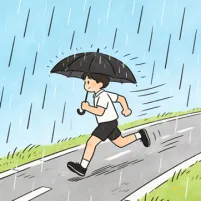 2.
2.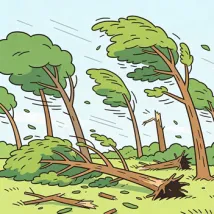 3.
3.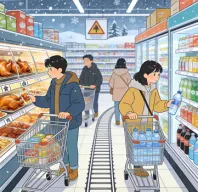 4.
4. 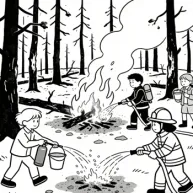 5.
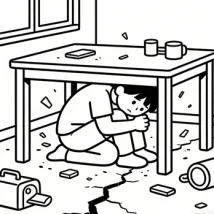
5.
1. when, rainstorm___________________________________________________
2. because of, fall___________________________________________________
3.prepare for, snowstorm______________________________________________
4. put out, yesterday________________________________________________
5. should, earthquake________________________________________________
五、阅读理解
Natural disasters not only cause physical damage but also influence people’s moods greatly. After terrible events such as earthquakes or floods, many people, especially kids, may feel nervous, hopeless or upset. These emotions are completely normal and not unusual.
It’s necessary to speak out about these thoughts. Hiding them in your heart will probably make the situation worse. You can communicate with your parents, classmates or teachers. Many schools organize special activities or lessons to guide students to know more about these feelings and learn to managethemafter disasters.
Bear in mind that having these sad feelings doesn’t mean you are not strong. It just shows that you have experienced a hard time. As time goes by, with support and love from people around, most people can cheer up gradually. Besides, trying to give a hand to others can also make you feel more confident and positive.
1.What does the underlined word “them” in Paragraph 2 refer to?
A. FeelingsB. families
C. ActivitiesD. disasters
2. The word “manage” in Paragraph 2 probably means “______”.
A. forget quicklyB. deal with successfully
C. laugh atD. look for
3.According to the passage, what will happen if people keep bad feelings inside?
A. They will become stronger.
B. The situation will get worse.
C. They will feel better soon.
D. Nothing will be influenced.
4. What can we infer from the passage?
A. Only children have bad feelings after disasters.
B. Helping others is a good way to lift our spirits.
C. Schools never care about students’ moods after disasters.
D. Having sad feelings means people are weak.
5.Which is the best title for the passage?
A. Kinds of Natural Disasters.
B. How to Keep Safe in Disasters.
C. Dealing with Feelings After Disasters.
D. Physical Damage from Disasters.
Unit 9 Listening & Speaking
一、短语默写
1. take away2. heavy rainstorm
3. burn down4. be struck in
5. in need6. sweep through
7. family members8. safe and sound
9. thank goodness10. break into pieces
11. get hurt12. worse and worse
13. climate change14. all year round15. environmental protection
二、单项选择
1-5 BACCB
三、情景交际
A: What do you know about the earthquake?/What is an earthquake?
A: What do you know about the heatwave?/ What is a heatwave?
B: That's terrible / What a pity
A: Are you OK / all right?/Is everyone safe?
四、阅读理解
1-5ABACB
1.What should we do first when an earthquake starts? (地震开始时我们首先应该做什么?)
答案: A. Keep calm. (保持冷静。)
解析: 根据文章第二段第一句 “We should try to stay calm as the earth begins to shake.” (当地面开始摇晃时,我们应该努力保持冷静。) 可知,地震发生时的首要行动是保持冷静。
2. It's safe for us to ______ when an earthquake happens. (地震发生时,______对我们是安全的。)
答案: B
解析: 根据文章第三段 “If we are inside when the earthquake starts, it's a good idea to get under a table or a bed.” (如果地震开始时我们在室内,躲到桌子或床底下是个好主意。) 可知,躲在坚固的桌子底下是安全的。图片B描绘的正是这一情景。而图片A(跑下楼梯)、C(挤在楼梯上)、D(使用电梯)在文章中都被描述为危险行为。
3.What does the underlined word "it" in Paragraph 4 refer to? (第四段中划线单词 "it" 指代什么?)
答案: A. The car. (汽车。)
解析: 第四段中的句子是 “If we are in a car, we'd better park the car and stay in it.” (如果我们在车里,我们最好把车停好,然后待在它里面。) 这里的代词 “it” 指4.If we are in a car during an earthquake, where should we park the car? (如果地震时我们在车里,应该把车停在哪里?)
答案: C. In a place without trees and tall buildings. (在一个没有树木和高大建筑物的地方。)
解析: 根据文章第四段 “The parking place should be a place without trees and tall buildings.” (停车的地方应该是一个没有树木和高大建筑物的地方。) 可知,这是最安全的停车地点。
5. What could be the best title for the text? (这篇文章最好的标题是什么?)
答案: B. How to Protect Ourselves During Earthquakes (如何在地震中保护自己)
解析: 整篇文章围绕地震发生时的自救方法展开,详细介绍了在室内、室外以及车内等不同场景下应该采取的措施。因此,“如何在地震中保护自己”最能概括文章的中心思想。其他选项如地震成因、危害或种类,文章均未涉及。
Unit 9 Exploring the topic
1. in large numbers2. fill...with...
3. lose one's home4. cooked food
5. make preparations6. sweep through
7. living environment8. get injured / be hurt
9. within one's reach10. at once / right away
11. power line12. all over the world
13. keep away from14. too...to...
15. put...into practice16. safety training17. expect to do sth.
二、填空
1. preparations2. flashlights3. harmful4. glue5. in
6. harder7. more often8.best9. (the) most beautifully10. came
三、情景交际
1. What do you know about/What is a
2. What do you think of
3. That's terrible
4. Are you all right?/How are you?
四、看图写话
1. An earthquake swept through the village last week.
2. The students are busy cleaning the classroom.
3. The birds lost their home.
4. The boy is helping the old man in need.
五、短文填词
1.dangers2.were3. to4.built5.loudly
6.earliest7. the8. wisdom9. but10. amazing
解析:
1.空格前有“one of the biggest”(最大的……之一)。“one of the + 形容词最高级 + 可数名词复数”是固定结构,表示“最……的……之一”。括号内给出的词是 danger(危险,名词),需要将其变为复数形式。
2. 句子开头是“But in ancient China”(但在古代中国),表明时态是一般过去时。主语是“there”,后面跟着“no such things”(没有这样的事物)。“things”是复数,因此 be 动词需要用过去式的复数形式。
3. from... to...”在……和……之间
4. 句子开头是“During the Song Dynasty”(在宋朝期间),这是一个明确的过去时间状语,因此谓语动词需要使用一般过去时。括号内给出的动词是 build(建造),其过去式是不规则变化。
5. 空格处需要填入一个词来修饰动词“shouted”(大喊)。修饰动词需要用副词
6. 句子意为“这些塔是中国___(early)的消防站”。这里表示“最早的”,需要用形容词的最高级
7. 句子意为“他们成为了中国古代___(the)第一支专业的消防队”。在序数词“first”前面,通常需要加上定冠词。
8. 空格处与后面的“strength”(力量,名词)由“and”连接,作介词“of”的宾语。因此,括号内给出的词“wise”(聪明的,形容词)需要变为名词形式,表示“智慧”。
9. 前后两句存在转折关系(没有机器,但是用了头脑)。因此需要一个表示转折的连词。
10. 句子意为“当我们面对大麻烦时,人们的辛勤工作总是令人___(amaze)”。这里需要一个形容词作表语,修饰“people's hard work”(人们的辛勤工作)。修饰事物通常用 -ing 结尾的形容词,表示“令人惊讶的”。
Developing the Topic
一、单项选择题
1.D解析:when 引导过去时间状语从句,主句用过去进行时(was/were + doing)。
2.B解析:比较级 + and + 比较级表示 “越来越……”,harder and harder 意为 “风越来越大”。
3.A解析:after + 一段时间表示 “…… 之后”,符合句意。
4.C解析:dark clouds(乌云)预示着 **rainstorm(暴雨)** 即将来临。
5.B解析:由后句 lightning(闪电)可知,对应的是thunder(雷声)。
6.A解析:pour down(雨)倾盆而下;break down 出故障;step out 走出;hang on 坚持。
二、用所给词的适当形式填空
1.harder(than 是比较级标志)
2.hit(2023 为过去时间,用一般过去时)
3.riding(过去进行时:was/were + doing)
4.Finally(副词,置于句首表示 “最后”)
5.seeing(remember doing sth. 记得做过某事)
6.from(固定搭配:stay away from 远离)
7.to be(固定搭配:seem to be 似乎……)
8.noisy(become + 形容词,构成系表结构)
9.to wait(固定搭配:decide to do sth. 决定做某事)
10.began(at 3 o’clock 为过去时间,用一般过去时)
三、完形填空
1.C2.D3.B4.D5.A6.B7.D8.A9.C10.B
【导语】本文主要讲述了几个月前“我”在学校经历的一场暴风雨,雨水冲进教室,学校被淹,在老师的带领下大家有序撤离,之后又一起清理教室的故事。
1.句意:水是地球上最有用的东西之一。
perfect完美的;expensive昂贵的;useful有用的;correct正确的。根据“We drink it, wash with it and cook with it.”可知,水在生活中用途广泛,非常有用。故选C。
2.句意:那是夏天,天气非常热。
machine机器;product产品;spirit精神;weather天气。根据“It was summer and the…was really hot.”可知,描述的是天气状况。故选D。
3.句意:我们正在为考试学习,这时一场暴风雨来了。
chance机会;storm暴风雨;lesson课程;teacher老师。根据“The sky went dark and the rain started to beat heavily against the windows.”可知,这是一场暴风雨。故选B。
4.句意:然后,雨水开始从屋顶渗进来,落在教室的课桌上。
lock锁上;shut关闭;hide隐藏;fall落下。根据“it started to come through the roof”可知,雨水从屋顶落下,掉在课桌上,符合语境。故选D。
5.句意:我们的书变得湿了。
wet湿的;rich富有的;thick厚的;boring无聊的。根据“Then, it started to come through the roof and…on the desks in the classroom.”可知,雨水落在书上,书会变湿。故选A。
6.句意:一开始我们没有意识到那是什么。
forget忘记;realize意识到;invent发明;satisfy使满意。根据“Suddenly there was a loud sound. We didn’t…what it was at first.”可知,听到巨响但一开始不知道发生了什么,“意识到”符合语境。故选B。
7.句意:我们都感到非常害怕,一些女孩开始哭了。
funny有趣的;excited兴奋的;angry生气的;afraid害怕的。根据“some of the girls started to cry”可知,一些女孩们开始哭泣,说明大家感到害怕。故选D。
8.句意:她告诉我们所有人握住手。
hold握住;shake摇晃;wash洗;change改变。“hold hands”是固定搭配,意为“手拉手”,老师让大家手拉手有序撤离。故选A。
9.句意:我们直到水退去才离开那里。
if如果;although虽然;until直到;while当……时候。“not…until…”是固定结构,意为“直到……才……”,符合语境。故选C。
10.句意:然后我们齐心协力,清理了每一间教室。
took off起飞,脱下;pulled together齐心协力;picked up捡起;cleaned off擦去。根据“and tidied up every classroom”可知,大家一起清理教室,体现了齐心协力的精神,“pulled together”符合语境。故选B。
四、短文填空
1.hit(一般过去时)
2.to blow / blowing(begin to do /doing 开始做某事)
3.scared(修饰人用 -ed 形容词)
4.away(stay away from 远离)
5.heavily(副词修饰动词 pour down)
6.lasted(一般过去时)
7.was(a big tree 为单数,用一般过去时)
8.leaves(leaf 的复数形式)
9.preparations(固定搭配:make preparations 做准备)
10.what(固定结构:what to do 做什么)
Wrapping up the Topic
一、根据提示补全单词
1.towel2.nose3.seriously4.injured5.scared
6.global7.helpless8.normal9.coal10.physically
二、单句语法填空
1.quickly(副词修饰动词 spread)
2.most seriously(among all 表示范围,用最高级)
3.immediately(副词修饰动词 leave)
4.disasters(are 提示主语用复数)
5.running(固定搭配:keep doing sth. 一直做某事)
三、句型转换
1.Should we2.didn’t burn3.What did4.very scared5.ran out
四、看图写话(参考句子)
1. He was walking home when a rainstorm came.
2. . Many trees fell down because of he strong wind / typhoons.
3. They are buying things in the supermarket to prepare for the snowstorm now.
4. The firemen put out the fire yesterday./Firefighters put out a big fire in the forest yesterday.
5. We should stay calm when an earthquake happens./We should hide under a desk during an earthquake.
五、阅读理解
1.A 解析:them 指代前文的 feelings(情绪)。
2.B 解析:manage 意为 “处理、应对”,相当于 deal with successfully。
3.B 解析:文中 Hiding them in your heart will make things worse.
4.B 解析:文中 Helping others can make you feel more positive.
5.C 解析:全文围绕 “灾后情绪及应对方法” 展开。
 10个月宝宝每天需要喝多少奶粉?

