跟着课本去旅行丨花洲书院讲解中英文对照版本(五)
- 2026-11-21 07:16:08
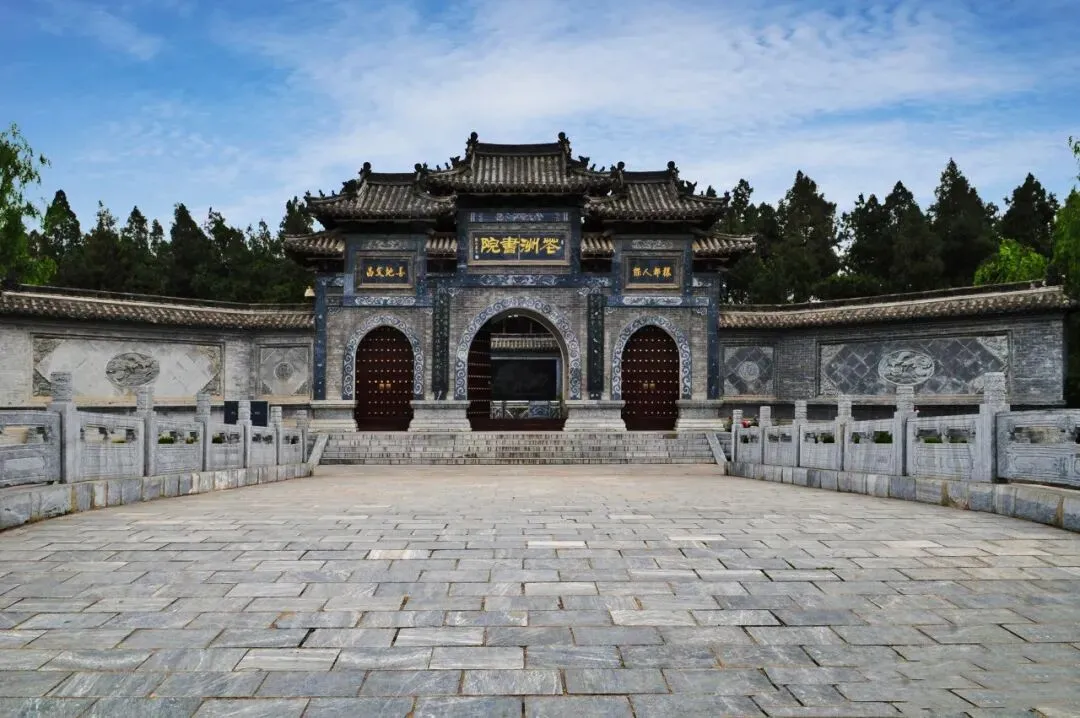
花洲书院相关知识
九、不欺堂
“不欺堂”,得名于范仲淹赠予邓州籍状元贾黯的“不欺”二字。
北宋庆历六年(1046年),邓州人贾黯考中状元,回乡省亲时专程到花洲书院拜见时任邓州知州的范仲淹,请教为人、为官之道。范仲淹对他说:“君不忧不显,惟‘不欺’二字,可终身行之。”
“Buqi Hall” takes its name from the two characters buqi, meaning “No deceiving” which Fan Zhongyan presented to Jia An, a Dengzhou native and the top scorer in the imperial examinations.
In the sixth year of the Qingli reign of the Northern Song Dynasty (1046), Jia An passed the imperial examinations as the foremost graduate. When he returned home to visit his family, he specially visited Huazhou Academy to meet Fan Zhongyan, then prefect of Dengzhou, and sought his advice on how to conduct oneself and serve as an official. Fan Zhongyan told him, “You need not worry about remaining obscure; only the two words ‘No deceiving’ can be practiced throughout one’s life.”
所谓“不欺”有三层含义:不欺君心、不欺民心、不欺自己的良心。贾黯将此二字铭记于心,终身践行,为官耿直清正,官至御史中丞。他常感慨:“吾得于范文正公者,平生用之不尽也。”The term buqi has three layers of meaning: not deceiving the ruler, not deceiving the people, and not deceiving one’s own conscience. Jia An kept these two words firmly in mind and practiced them throughout his life. He served with integrity and uprightness, eventually rising to the post of Vice Censor-in-Chief. He often remarked, “What I learned from Lord Fan Wenzheng has served me inexhaustibly throughout my life.”
不欺堂前楹联:“不欺即磊落光明,状元终身可用;守直必刚正洁己,孺子素愿可嘉。”
The couplet of Buqi Hall reads:
“Not to deceive is openness and brightness, useful to the foremost graduate throughout his life;
To uphold uprightness is firmness and self-discipline, worthy of the pure aspiration of a young scholar.”
十、春风阁
春风阁,是书院外古城墙侧畔的一座高阁,高约15米,号称“中原第一阁”。它最初由范仲淹在北宋庆历年间知邓州时构筑,用于登览、会友、观景。Chunfeng Pavilion is a tall tower standing beside the ancient city wall outside the academy. About 15 meters high, it is known as the “First Pavilion in the Central Plains.” It was originally built by Fan Zhongyan during the Qingli reign of the Northern Song Dynasty, when he served as the prefect of Dengzhou, for climbing, meeting friends, and enjoying the view.
它的名字来自“孔子如春风,至则万物生”的典故。《西京杂记》记载,汉武帝曾问东方朔:“孔子和颜回谁的德行更高?”东方朔回答:颜回之德像桂花,能香染一山;孔子之德则像春风,所到之处万物萌发。Its name derives from the saying, “Confucius is like a spring breeze; wherever he arrives, all things flourish.” According to Xijing Zaji (Miscellaneous Records of the Western Capital), Emperor Wu of Han once asked Dongfang Shuo, “Who had higher virtue, Confucius or Yan Hui?” Dongfang Shuo replied, “Yan Hui’s virtue is like osmanthus, whose fragrance perfumes a mountain; Confucius’s virtue is like a spring breeze, causing all things to sprout wherever it passes.”
花洲书院里的春风堂和春风阁,都取意于此:讲堂称“春风”,寓意教师讲学如春风化雨、学子受教如沐春风;城墙上的高阁称“春风阁”,则把这种教化、文风与登高望远的气象合在一起。Within Huazhou Academy, both Chunfeng Hall and Chunfeng Pavilion draw on this allusion: the lecture hall is named “Chunfeng” to suggest that teaching is like a spring breeze and gentle rain, while students receive instruction as if bathed in a spring breeze; the tower on the city wall, called Chunfeng Pavilion, combines this spirit of education and literary culture with the broad vision of ascending to a height and gazing into the distance.

