高中英语面试之【诗歌】真题&赏析方式&教案
- 2026-11-23 07:06:07

PART1
真题
题目1:
I wandered lonely as a cloud
That floats on high o’er vales and hills,
When all at once I saw a crowd,
A host of golden daffodils;
Beside the lake, beneath the trees,
Fluttering and dancing in the breeze.
Continuous as the stars that shine
And twinkle on the milky way,
They stretched in never-ending line
Along the margin of a bay:
Ten thousand saw I at a glance,
Tossing their heads in sprightly dance.
3. 基本要求:
(1)朗读所给段落。
(2)配合教学内容适当板书。
(3)根据所给材料的内容,设计分析语篇特征的教学活动。
(4)用英文试讲。
(5)试讲时间:10分钟。
题目2:
The wind
O wind, why do you never rest,
Wandering, whistling to and fro,
Bring rain out of the west,
From the dim north bringing snow?
基本要求:
(1)朗读所给段落。
(2)配合教学内容适当板书。
(3)根据所给材料的内容,分析诗歌文体特点。
(4)用英文试讲。
(5)试讲时间:10分钟。
题目3:
A Farewell Song
The Little town is quiet after morning rain;
No dust has dulled the tavern willows fresh and green.
I would ask you to drink a cup of wine again;
West of the Sunny Pass no more friends will be seen.
题目4(初中)
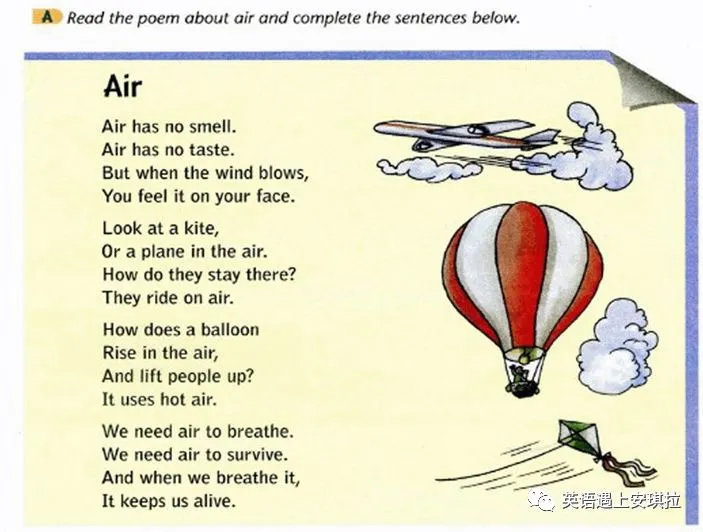
上面4个真题就是18/19年考过的跟诗歌相关的题目。
题目1 选自英国浪漫主义湖畔诗人华兹华斯的诗歌《我孤独地漫游,像一朵云》。题目要求分析语篇特征,也就是需要在教学中带领学生分析诗歌的语篇特征。
题目2 选自英国最重要的女诗人之一克里斯蒂娜·罗塞蒂的诗歌《风之歌》。
题目3 是王维《送元二使安西》的英译版。
题目4 选自沪教版7年级上册Unit3。
PART2
How to analyze a poem?
浏览器搜索相关问题能看到很多全英解释,为了减轻大家备考压力,我直接为大家梳理出3种歪果仁分析诗歌的思路。
方式1:
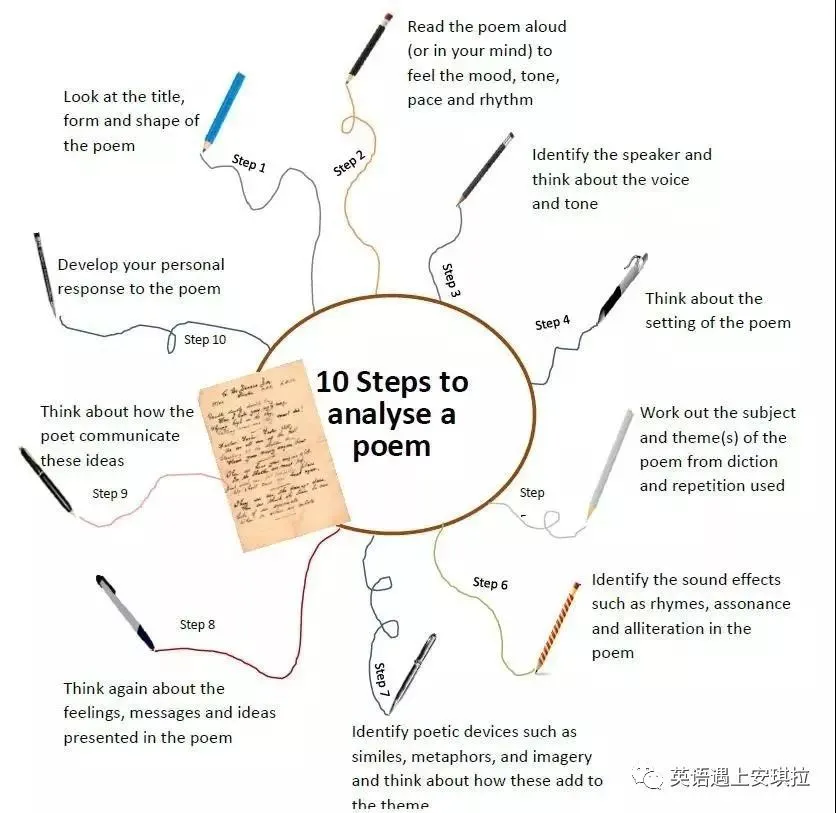
试讲时presentation部分(诗歌赏析部分)可以从以上10个steps中任选几步作为你的诗歌赏析方式。
方式2:
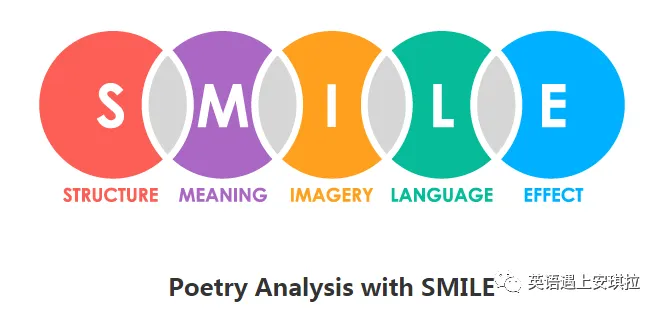
Structure:The structure refers to the physical and grammatical composition of the poem.
· number of verses/stanzas 诗歌的节数或段数
· rhyme scheme 韵律
· repetition 重复
· enjambment 跨行连续
· sentence structure and grammar 句子结构与语法
· punctuation 标点符号
Meaning:The basic subject of a poem or the main idea along with its deeper significance. 诗歌的主旨大意与深层信息
Imagery:Imagery refers to language that appeals to one of the five senses - touch, taste, smell, sound, and sight. Imagery helps strengthen a writer's description by providing physical details that enable the reader to better imagine the scene or understand the speaker's feelings. 意象通过触听视味嗅五种感官传递作者思想,帮助读者更好的理解其中情感。
Language:
· Does the poem contain metaphor, simile, personification, hyperbole or other figurative language? 隐喻、明喻、拟人、夸张。
· Does the poem play with sound using alliteration, repetition, or rhyme? 头韵、重复、押韵
· Does the poem contain formal or informal dialect? Does the speaker seem to come from a particular region, country, or cultural background? 诗歌中语言是正式的还是非正式的?作者是否保留着特殊地理位置的语言习惯。
Effect:How do you feel after reading it? What is the mood of the poem?读完诗歌后的感受,诗歌中传递出的情感。In this way, students can consider the effect of the poem's structure, imagery, language, and message as they work together. 通过提问这样的问题可以让学生重新考虑本诗的结构、意象、语言等。
方式3:
1. Read the poem aloud multiple times
Pay close attention to the rhythm and punctuation of the poem, the stressed and unstressed syllables
2. Review the title
The title often contains important clues for understanding the piece.
3.Consider the mood and tone
4. Highlight the use of poetic devices
Poetic devices are tools that can create rhythm, enhance a poem’s meaning, or intensify a mood or feeling.
Metaphor:a comparison between two different things
Simile:a direct comparison between two things using the words “like” or “as”
完整版诗歌手法:
https://www.matrix.edu.au/essential-guide-english-techniques/the-literary-techniques-toolkit/
(复制网址,用浏览器打开)
PART3
诗歌赏析教案模板
Teaching Objectives
1. Understand the poetry and______.(如有押韵填写)
2. Improve the ability to analyze poetry.
3.How to appreciate a poem.
Teaching Key Points
Understand the poetry and images in it.
Teaching Difficult Point
How to analyze and appreciate a poem.
Teaching Procedure
Step 1 Warming up
Free talk :_________________(与主题相关问题)(或 背一首翻译成英文的诗,让学生猜名字或问这首诗中的意象)
Step 2 Presentation
1. Listen to the tape and appreciate the poem first. They should find the main idea.
2. Read and underline the images in the poem, and discuss what picture did the poem describe.
3. Read again to analyze (有哪项分析哪一项)
①images
②rhyme
③grammar
④simile
Step 3 Practice
Listen and read after the tape, focus on its voice and tone.
Step 4 Consolidation
Work in groups to have a competition on reciting the poetry.
(或讨论与主题相关的话题;学生自由创作诗歌)
Step 5 Summary and homework
1. Students summarize and teacher emphasizes the emotional aim.
2. Search more poetries of this writer.

