沪教版新教材七上 U3|描述 “正在消失的职业”,掌握过去 & 现在对比阅读逻辑
- 2026-11-20 07:15:32

🌟沪教版七上课本原文引入 课文介绍了三种渐渐消失的老职业:传呼机接线员、磨刀匠、露天电影放映员。 整篇文本最大的阅读考点:用一般过去时描述过去的情况,一般现在时描述当下现状,形成今昔对比,这也是上海中考阅读、完形高频出题角度。
✅核心知识点:今昔对比的阅读逻辑(中考阅读必考点)
很多阅读题,会拿「过去是什么样」vs「现在是什么样」设置细节判断题、推理题。
两类核心句型(课本原句)
- 1. 描述过去曾经普遍 / 流行
(一般过去时)
In the 1990s, it was common to call a beeper operator to send the messages. From the 1960s to the 1970s open-air cinemas became popular.
👉标志词:in the 1990s, from … to …(过去时间段),动词用过去式。
- 2. 描述现在的变化
(一般现在时)
However, now people use smartphones to send messages. Fewer and fewer people take up the job now.
👉标志词:now,today 转折词however带出前后反差,题目最爱在这里挖空、出判断正误。
📌中考阅读命题套路
看到文中同时出现过去时间 + now/today,题目大概率会考:
✅过去这件事是否很普遍✅现在发生了什么变化、原因是什么 ✅哪些事物已经不再流行
易错提醒:不要混淆时间! 题干问 now,不能选过去的事实;问 in the 1990s,不能拿现在的信息作答。上海中考阅读细节题,时间陷阱非常高频。
📖重点中考词汇(考纲内)
- 1. common adj.
普遍的,常见的 - 2. popular adj.
受欢迎的 - 3. fewer and fewer
越来越少(fewer 修饰可数名词复数,阅读单选常考 little/few 辨析) - 4. take up
从事(工作);占据(中考多义短语,阅读高频) - 5. set up
搭建;设立 - 6. enjoy v.
享受;喜爱(enjoy doing sth 固定搭配)
📝阅读小练习
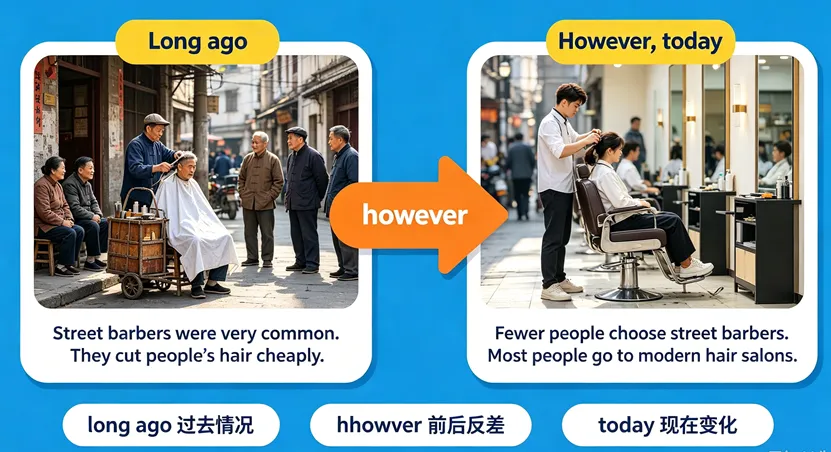
Long ago, street barbers were very common in Shanghai. They went from street to street and cut people’s hair. At that time, many people liked this cheap service. However, fewer people choose street barbers today. Most people go to modern hair salons.
True or False
( ) 1. Street barbers were popular long ago.
( ) 2. Nowadays most people still ask street barbers for haircuts.
👉答案+解析
1. T 根据Long ago, street barbers were very common. common=popular
2. F 原文:today most people go to modern hair salons,不是找街头理发师。 考点:抓住long ago和today 的今昔对比。
💡阅读解题小口诀
看见时间要圈画,过去现在分两家; however 一出现,前后情况反差大; 题干问啥找啥句,时间陷阱别踩它。

